From Heirloom to Hybrid: Seed Catalog Vocabulary

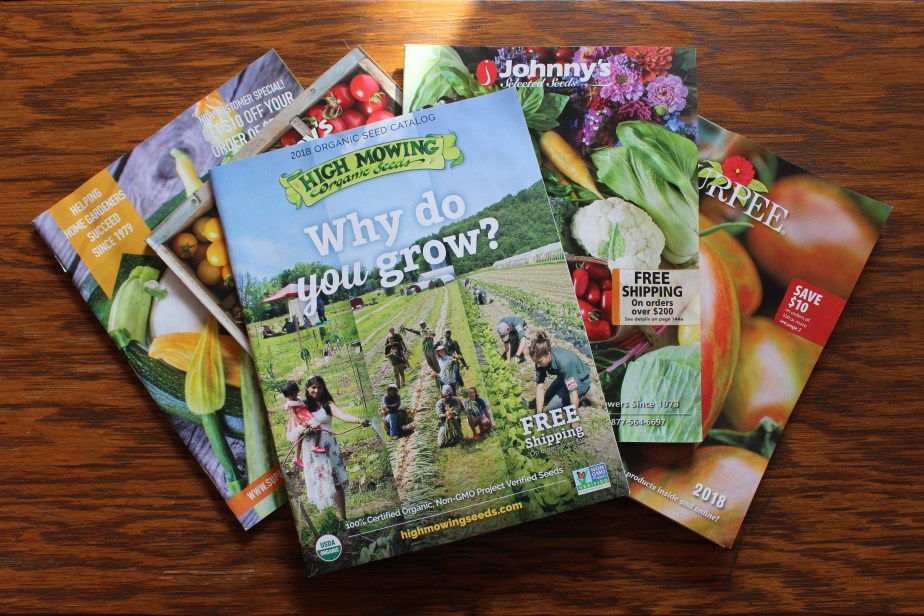
IMG_5443Heirloom seeds are open pollinated seeds that have been saved and passed down from one generation to another. High Mowing Seeds describes them as breeds that “pre-date, or are unaltered by, the last hundred or more years of modern breeding work”.  The term heirloom can also apply to fruit trees and livestock. These breeds and seeds have been cherished, bred and protected for future generations by previous generations and tend to be hardy farm favorites valued for their genetic diversity, appearance and taste.

Open Pollinated seeds are seeds that are produced from the natural cross pollination of two of the same kind of plant. All heirlooms are open-pollinated, meaning there can be slight natural differentiation between plants and successive generations. With open pollinated plants care needs to be taken to ensure that future generations are useful and viable. Keeping plants away from other similar varieties during the growing season is necessary to avoid cross breeding. Open pollinated seeds are used to make hybrids.

Hybrids are plants created by breeding two different but related varieties to create offspring with desirable traits. This can happen naturally in the wild but commercial seed producers use artificial, controlled pollination to ensure a standard reproduction. Hybrids were developed for large scale agriculture to guarantee uniformity for produce as well as greater disease resistance, yield and better flavor. While looking through seed catalogs you may see F1 Hybrids. F1 stands for the first generation. If you save seed from an F1 hybrid the offspring will be a random mix of both parents so hybrid seeds need to be repurchased every year.

Genetically Modified Organisms are usually used in creating commercial seed varieties such as corn, soybeans and grains. However it is important to know the distinctions between GMO seed and Hybrid seeds especially as Monsanto has moved into the vegetable market through acquiring Seminis and De Ruiter; both large vegetable seed producers. Hybrids are created from varieties that can genetically reproduce. GMOs are created using sophisticated technology to combine DNA from species that cannot breed (technically referred to as gene splicing). An example is the AquaAdvantage Salmon which was bred with eel DNA or combining fish DNA and tomatoes to increase frost tolerance. Beyond combining two breeds that cannot mate GMO technology also can turn off genes (gene silencing techniques) and edit genes. These new technologies are currently being used to prevent apples from browning when bitten.

Sources

https://www.smallfootprintfamily.com/hybrid-seeds-vs-gmos

https://usrtk.org/gmo/newgmos/

http://www.thelexicon.org/

OSSI- The Open Source Seed Initiative


ossi_logo_words_200_x_147

The Open Source Seed Initiative was founded in 2012 as a response to large conglomerate companies like Monsanto and Dupont who patent protect and own seeds. By taking inspiration from open source software and the free dispersion of knowledge the OSSI goal is to free the seed.

OSSI partners with plant breeders and seed companies who pledge one or more varieties and agree to sell it to their customers as OSSI-pledged freed seed.

The OSSI Pledge:

You have the freedom to use these OSSI-Pledged seeds in any way you choose. In return, you pledge not to restrict others’ use of these seeds or their derivatives by patents or other means, and to include this Pledge with any transfer of these seeds or their derivatives.

Currently 36 plant breeders and 46 seed companies are partnered with OSSI. Customers who buy these seeds are allowed:

  1. The freedom to save or grow seed for replanting or for any other purpose.
  2. The freedom to share, trade, or sell seed to others.
  3. The freedom to trial and study seed and to share or publish information about it.
  4. The freedom to select or adapt the seed, make crosses with it, or use it to breed new lines and varieties.

Patent protected seeds cannot be saved, replanted or shared by farmers and cannot be used to breed new crop varieties. Their genes, protected as intellectual property, are exempt from use in research at universities and  by plant breeders and small seed companies.

 The Mission:

The Open Source Seed Initiative (OSSI) is dedicated to maintaining fair and open access to plant genetic resources worldwide in order to ensure the availability of germplasm to farmers, gardeners, breeders, and communities of this and future generations.

Choosing to purchase freed seed and saving seeds reduces reliance on large seed companies. Since 2013 Monsanto, Dupont and Syngenta have controlled half the global market for the seed industry through seed company acquisitions, biotech acquisitions and joint ventures. They are in direct competition with the idea of seed sovereignty. Seed sovereignty “reclaims seeds and biodiversity as commons and public good. The farmer’s rights to breed and exchange diverse open source seeds which can be saved and which are not patented, genetically modified, owned or controlled by emerging seed giants.”

These chemical companies create genetically modified seeds to use in conjunction with the pesticides they manufacture. Monsanto’s Roundup Ready seeds are genetically resistant to glyphosate, the main chemical in Monsanto’s Roundup. When farmer’s violate patents by saving and replanting seed they hurt Monsanto’s business model by not being reliant on purchasing new seed every year. As a large and powerful company Monsanto frequently attacks seed savers through investigations, coerced settlements and lawsuits in order to maintain control of the global commercial seed market.

This spring support open source seeds and purchase from OSSI partners and small independent seed companies.

seedindustry.jpg
Click Here for a high resolution PDF


Sources:

https://osseeds.org/

https://www.lexiconoffood.com/seeds-and-grains/seed-sovereignty

http://www.corpwatch.org/article.php?id=15825

https://www.cornucopia.org/2013/09/seed-industry-structure-dr-phil-howard-2/

https://awaytogarden.com/a-new-brand-of-seed-in-town-ossi-or-open-source-seed-initiative/

Theobrama Truffles

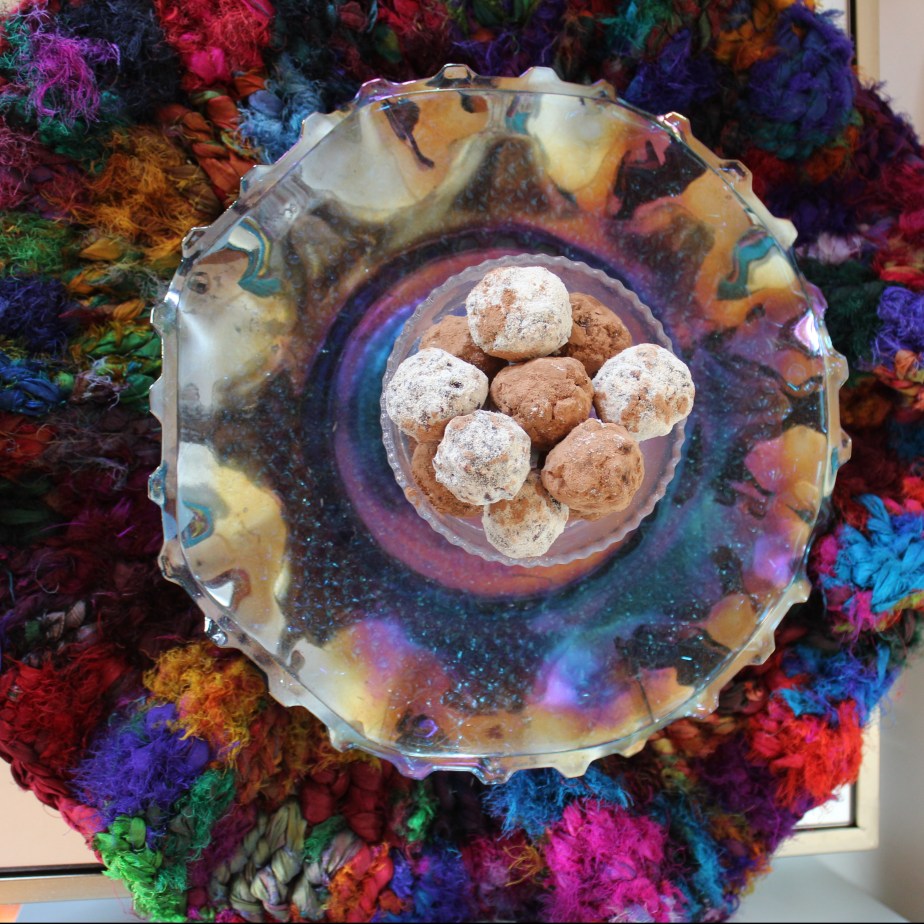
A favorite food memory from my childhood was visiting the North Market in Columbus and picking out a truffle from Pure Imagination Chocolatiers. Mom would always choose the Theobrama truffle, a warm combination of dark chocolate and cayenne pepper that was the perfect mix of spice and sweet. Initially my young palate shied away from any mention of spiciness but after being convinced to have a nibble of hers the Theobrama truffle became my favorite as well. These raw truffles are my homage to those original. They are easy to make and easy to eat with the cacao nibs adding a satisfying crunch.

IMG_1877

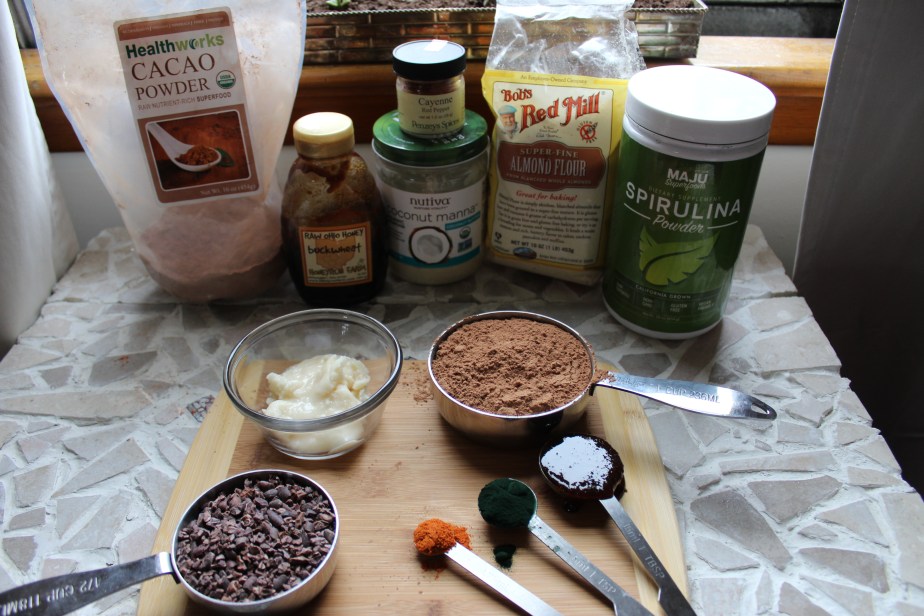
1/4-1/2 tsp. Cayenne Pepper

1 Cup Cacao Powder

1 tsp. Spirulina Powder

Pinch of Salt

1/2 Cup Cacao Nibs (toasted)

1 Tbs. Almond Flour

1 Tbs honey (or syrupy sweetener of your choice)

2 Tbs Coconut Manna

Mix together dry ingredients. Mix honey and manna separately. (Coconut Manna like coconut oil needs to be warmed to make it easy to work with. Warming the mixing bowl by placing it over a bowl or pot of hot water from the tap should do the trick.) Add dry ingredients to wet ingredients. Toast Cacao Nibs in a warm pan until they turn from dull to shiny. Allow to cool and mix in.


Shape the dough into bite sized balls with your hands. Roll balls in cacao powder. Here I also used coconut flour for the white truffles.

Store in fridge and enjoy!


All Good in the Agrihood?

What is an Agrihood? I came across this term in The National magazine on a train ride home from a visit to the Hudson Valley. A combination of agriculture and neighborhood, ‘agrihoods’ or ‘agri-communities’ are the latest marketing ploy created by developers to profit off the popularity of the farm-to-table, back-to-the-land, wellness trend. And with homes from the 300,000s to 650,000s and up they have certainly created a cash crop.

Until Merriam-Webster inducts “agrihood” into the dictionary the working definition according to Forbes  is, “a community that is usually planned around a farm and offers access to unblemished landscapes, locally grown food, and homes built to environmentally friendly standards.”

It’s important to note that these are planned communities, meaning developers carefully designed the placement of the homes in an area that was previously undeveloped. This differentiates them towns with ‘agrihood’ amenities.

Agrihoods were partially born out of the popularity of golf communities where buyer’s paid large sums for views of the green. Instead of being situated strategically around the golf course; however, these homes are situated around a farm and nature areas. A common denominator in all of these communities are the farm stands where neighbors can purchase produce and meat from the farm or pick up their CSA (community supported agriculture) share. They also feature the standard pool and clubhouse but can take wellness a step further than the gym. Aberlin Springs in Dayton, Ohio advertises plans to build a wellness center for the community and the wooded walking trails are popular with residents in the Serenbe community of Georgia.

In many ways these developments attempt to combine life in small town America with the ease of access that city living offers. The community may have a restaurant or two cooking local food from the farm as well as coffee shops and stores all within walking distance. Homes featuring porches and low fences as well as parks, playgrounds and outdoor gathering spaces are in the hopes of creating neighborly interaction. Homeowners tout the benefits of not having to leave the neighborhood that often and that their children know where their food comes from and can play outside.

Where I grew up developments were usually already situated around farm fields as they rapidly replaced farmland with cookie cutter houses and landscaped lawns. Some even took on the perverse practice of being named after the farm which they had replaced. Agrihoods are more appropriate recipients of this practice (see Skokomish Farms in Puget Sound, WA). The farms they surround tend to be small, organic farms that were started during or before the houses were built.

In fact for some landowners choosing to create an ‘agri-community’ is a way to preserve land that likely would have been developed with less foresight. This was the case with Agritopia in Gilbert, Arizona. With rapid suburban development encroaching on the family farm the family took matters into their own hands. This was also the case with the Serenbe community in Georgia which faced development pressure from the suburban sprawl of Atlanta.

While its great to attempt to recreate the connection with the land through walkable communities where you know your neighbor and local farmer, at the end of the day agri-communities are commodifying, rebranding and re-selling the pastoral rural community of yesteryear for an exorbitant sum to the modern suburbanite. Development is still development and building a brand new 2,000+ square foot house with a two car garage is not the model of sustainability. In theory agrihoods may be a step back in the right direction but in practice are they really worth the hype?


Sources:
https://aberlinsprings.com
http://serenbe.com/
http://agritopia.com/
http://willowsford.com/
http://www.skokomishfarms.com/
http://livecannerydavis.com/
http://www.businessinsider.com/agrihoods-golf-communities-millennial-homebuyers-2017-10
https://www.cbsnews.com/news/agrihoods-on-the-rise-suburbs-farm-to-table/
http://realtormag.realtor.org/home-and-design/feature/article/2017/05/inside-agrihood-trend